Showing posts with label Seoul National University. Show all posts

Friday, June 20, 2014

Collaborative lesson planning!

In such little time this trip has proven to be an amazing experience. Not only are we experiencing a completely new culture, we have been able to spend time working on ourselves as educators.

We have groups that include a Penn State Student (myself), an experienced agricultural educator and a Seoul National University student. This has given all of us the opportunity to learn more about the Korean culture as well as develop awesome lesson plans! The lesson plans we have been working hard on will be presented to high school students at Suwon High School early next week. With the help of our experienced agriculture teacher, NeungSu and I will be presenting on animal diseases and the importance of animal identification.

My Teaching Team - Jess, NeungSu and Me

Creating these lesson plans presented a great opportunity for each of us as instructors. Every group briefly presented their lessons plans to all the other groups. Everyone gave pointers to each other to improve our lesson plans and ultimately maximize our impact on the Suwon High School students. This has given me (and I'm sure many others) some insight as to how we can revamp the way we teach and look at our lessons from a new perspective. 

Feedback Session


Everyone's lesson plans were great, complete with activities to get students to think critically and every lesson gives the students the opportunity to engage with an agricultural topic.

I think the biggest challenge will be the language barrier we have been experiencing in Seoul. From trying to communicate with waiters, to something as simple as directions on a paper towel dispenser (which I was unable to figure out how to work, embarrassingly enough!) We have been working through trying to effectively communicate daily. It's amazing how well some Koreans can speak English, but my 20 hours of Korean language class just won't cut it! I attempt to speak Korean and most Koreans just laugh, although they do assure me it's good. Luckily I have NeungSu to help me effectively communicate with the students at Suwon next week.

The fact that English is the second language of the students we will teaching is an important point to take this into consideration when planning our agriculture lesson. NeungSu and I have thought about a few different ways to hopefully conquer this language barrier. I am going to have to make sure I talk slowly and regularly check-in to make sure the students catch everything I say. When needed, NeungSu will jump in to interpret when needed in order to ensure clarity. This will be especially important for directions to our activity since we want to make sure everyone understands and has a great time. NeungSu typed up half of our presentation in Korean as well so everything they here from me will be followed with the Korean version so it's easier for them to absorb. We are so lucky to have the SNU students to help all of us out along the way!

Thursday, June 19, 2014

Language Bridges

Most people are familiar with the term 'language barrier.' This refers to a breakdown of understanding between people due to a difference in languages. I have certainly experienced this so far on this experience. 

The other day when I tried to buy some clothes after my suitcase was lost, the saleslady tried so hard to help me. She knew I didn't understand things such as sizing and the way you go about paying.  I didn't know what she was saying, and she didn't know another way to say what she meant. We ended up resorting to lots of hand motions and drawings. And both of us used whatever words we knew from each others' language (not much from my end). Thank goodness, we were eventually able to overcome it to convey our meanings.


Our textbook and workbook
A nation's language can tell you a lot about its people-what they value, how they think. For instance, many words in Korean are very polite. There is even a verb ending that makes a request that is polite. Overall, this is also true with the people, as well. As you learn these intricacies, it become more apparent of the bearing language had on connections and cultures. 

By knowing a bit about the language and culture, you can better understand and connect with people individually. A language barrier can be a powerful force. It prevents understanding and can be very frustrating for both parties, But what's stronger than that is the willingness to try. 

My SNU teaching partner, Haejin, was asking me about what we learned in class one day. I told her I wasn't very good at speaking Korean yet. She replied that that is alright. It's not the lack of speaking ability that would cause problems. Instead, because I am trying, she was appreciative and excited. She explained that Korean people are happy just that we're trying. The effort is the important part.

Part of the reason we are visiting Korea is to learn about school-based agricultural education in another nation. However, another part is because of the relationships of this program. It would not be possible without the connections between faculty, students, etc at Penn State, University of
An awesome pencil I got from a quiz
Florida, and SNU. The continuation and strengthening of these bonds is even greater. By working with the Korean students we will be able to connect both with our partners and with the culture. Understanding of relationships between people and cultures is extremely relevant. And that's what makes all of these bridges important. 

I really love language school My least favorite thing about it is that it is only for five days. We will be able to reach hospitality level, but not much farther. It would take us months to be able to become anywhere near conversational. I would love to be able to be in this country and actually understand more of the language. That way I would be able to build my own bridges between the Korean culture and ours.

Lesson Planning Across the Globe

Annyeohaseo! What a whirlwind the past few days have been.  Seoul is a beautiful city, with the skyline interspersed with glimpses of the heavily forested mountains.  Although we have gotten the opportunity to explore the city in the afternoon, our days have been spent primarily working on two things: Korean language school, and lesson planning.

This is the view out of the back balcony from the SNU CALS building.  Mountains everywhere!

Part of what we are doing while we are in Korea is visiting Korean agricultural high schools, where we will not only get to observe teaching and learning in the high school, but also have the opportunity to design and deliver a lesson to Korean agriculture students!  All of the current ag educators from the US have been paired up with current Penn State students, as well as a current Seoul National University (SNU) student to design and deliver an ag-related lesson of their choice.

I have been paired up with Rachel from Penn State, and TaeHeon Song of SNU.  Over the past few days we have been working together to create our lesson and materials.  Having TaeHeon along with us has been invaluable since he is able to provide us with a Korean perspective as well as be able to converse with us in English!  It continually amazes me how proficient in English most people we have met seem to be.  I am extremely grateful for the dual signage and the hospitality that all Koreans have shown us since we have arrived!


                                    Dual language signage in the SNU CALS Building.


Some of the topics that our teams have chosen to present lessons on topics such as animal byproducts, asexual propagation of plants, animal disease control, and global ag technologies.  Rachel, TaeHeon and myself have chosen to present a lesson on sustainability of food production.  Our interest based approach is through kimchi.  Kimchi is a fermented food very popular in Korea, so popular that it is eaten at pretty much every meal, including breakfast.  It is usually made of cabbage and a red pepper powder (gochu garu).  We want our students to think about eating seasonally and more locally as a way to be more sustainable.  We are going to have our students make a list of the ingredients in one type of kimchi (there are literally hundreds of types) that we have them sample, and then try to identify the location of where that ingredient was grown or harvested.  Similar lessons have been presented to American students but using the cheeseburger or pizza as an example instead of kimchi.

Rachel and TaeHeon hard at work editing our presentation on Kimchi and Sustainability.


While working on creating our materials for our lesson today, we had the opportunity to work in the computer lab at the College of Agriculture and Life Sciences (CALS).  This proved extremely challenging as all of the text on the screen was in Hangeul (Korean characters).  The keyboard was in both Hangeul and English, and we were fortunately able to change the characters being typed on the screen from Hangeul to English.  I created a handout for our Korean students in English, and then TaeHeon went back and typed subtitles in Korean to make it easier for our students to understand.  


Taeheon translating our handout with the assistance of another SNU undergraduate student.

Normally, making a handout only takes me about 10-15 minutes to put together, but the combination of the language barrier and a computer that didn't want to cooperate with me, made for a very long and frustrating session.  However, we were successful.  I am very much looking forward to working with Rachel and TaeHeon to present our lesson!

Check back next week to see how our lesson went with our Korean students!

Tuesday, June 17, 2014

We Walk the Walk... But Can We Talk the Talk?

Annyeong-haseyo! Just one of the many words and phrases we have been working so diligently to learn.  For those of you who aren't quite as fluent in the Korean language as the 20 of us, that means "hello!"

Well, maybe "fluent" wasn't the best description of our ability, but I would give each of us an "A" for effort!

Our 20 hours of Korean language began this morning and though it may seem surprising to some, it was a blast (for a language class, that is...)!  We got to work straight away in our Korean workbooks.


We dug right into the mechanics of the language, learning each vowel, consonant, both tensed and aspirated, and began putting words together in no time!  If you ever need to know the Korean word for tree, milk, professor, or baby, we've got your back!


Also, our instructors were great!  They had an awesome attitude and made everyone feel very comfortable, though I am sure we sounded quite silly at times!  It was very cool to see the ways that they could take such a daunting task of learning a new language and make it fun will all sorts of activities ranging from written work, to listening skills, to working in pairs with flash cards (well at least Kelli and I had fun!)

Despite feeling awkward at times and laughing at the silly noises we were making, each of us recognized the value of the opportunity being placed in front of us.

As a group we have identified four values that we carry with us throughout this trip; Preparedness, Positivity, Pensiveness, and Plexibility (really pliable, but isn't plexibility a fun word?).

Remembering over the course of the next week to be prepared with positive attitudes entering the classroom everyday will ensure an awesome experience that will serve us well during our stay in Korea, as well as create memories for us to take home and share with our families, peers, and most importantly, skills we can share with our students.


Sunday, June 15, 2014

Welcome to Korea!


We're here and checked in to the Seoul National University Faculty House!

Well, that's not quite true.  Everyone that was coming from State College was delayed getting into Detroit and did not make the plane.  They will arrive Monday afternoon. 

Everyone else in the group, those traveling from other locations around the U.S., are here safe and sound. We will post again once the entire group is here.


Monday, March 31, 2014

Learning more about Korea: Sarah

Good Morning from Connecticut!

Mother Nature has seen fit to give us another round of winter weather before March is over, so not only did March come in like a lion, it is also going out like one too.  I can't believe we are only about 3 months away from our trip to Korea!  I am very excited to go and experience a completely different country on the opposite side of the world.  Since we are going to be headed to Seoul National University for part of our trip, I decided to look into learning more about SNU.

I was surprised to see when I looked up with course work available at SNU, that the College of  Agriculture and Life Sciences was a totally separate college from the College of Veterinary Medicine. The College of Veterinary Medicine appears to absorb undergraduates majoring in Pre-Veterinary Medicine as part of their student body, instead of being an exclusive Graduate Program.

I took a look at the course catalog for the College of Ag and it was interesting to see the variety of courses offered, including one on Medicinal Plants.  It also appears that depending on what college you attend, your tuition varies.  Compared to the US, where no matter the major, you pay the same tuition, I thought this was unique, but also made sense based on materials fees and the cost of running certain programs.

In the spirit of NCAA March Madness (Go UConn Huskies!!!), I was curious to see if SNU had any symbols or sports.  It seems that their school bird is the crane, as they embody longevity, and the ability to experience peace, even when surrounded by turmoil. Interestingly enough, the Crane has done very well in the DMZ, even flourishing!  Smithsonian Magazine recently covered an article on the crane in the DMZ: Smithsonian Article on the Crane


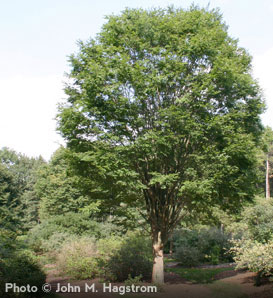
In addition to the crane, the school also has a school tree, the Zelkova Tree.  According to the SNU website, "Zelkova trees have strong immunity against diseases and have clean leaves and stems that were considered to represent scholarly qualities in the past. The longevous and generous characteristics of zelkova trees resemble Seoul National University’s fundamental beliefs: the determination to embrace the entire world’s wisdom as an academic leader and to carry on this determination forever. The school respects the sublime values of a scholar akin to the solid and bold branches of the tree and is prepared to embrace ideas of the world like the wide canopy of the zelkova tree’s branches."


Here's a link to the SNU page on their symbols and what they mean.

Enjoy!